
Our Story
Rooted in Sri Lankan heritage.
Crafted for the world.
Chapter One
The Land of Ceylon
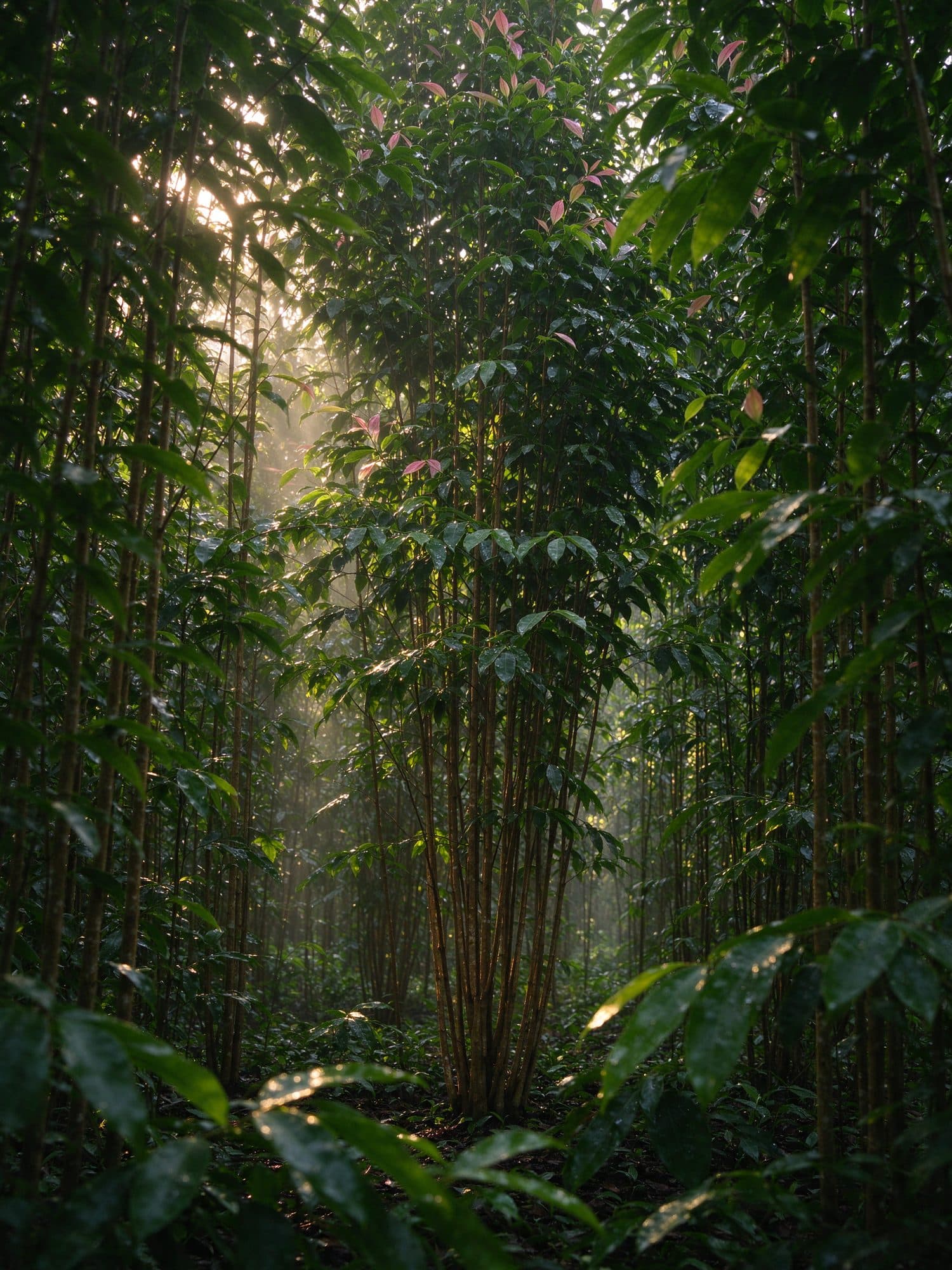
Long before it appeared on any label, Ceylon was a place — an island in the Indian Ocean, warm, green and rain-washed.
Monsoon rains sweep in from the sea. Rivers wind through low hills toward the coast. In the humid air of the southern and western lowlands, the soil and the seasons create conditions in which the cinnamon tree has long been at home.
Mornings arrive softly here, in mist and birdsong, and that gentleness seems to find its way into the spice itself.
Chapter Two
The Cinnamon Heritage of Sri Lanka
Cinnamon has been part of the island’s story for centuries. It drew merchants across the Indian Ocean and shaped trade routes between East and West, and for long periods it was among the most coveted goods in the world.
Through all of that history, the knowledge of how to grow, cut and peel the bark has been passed down — hand to hand, season to season. Today the words “Ceylon cinnamon” still point to one place of origin: Sri Lanka.
“A spice that carries the name of its island wherever it goes.”
Chapter Three
From Bark to Quill
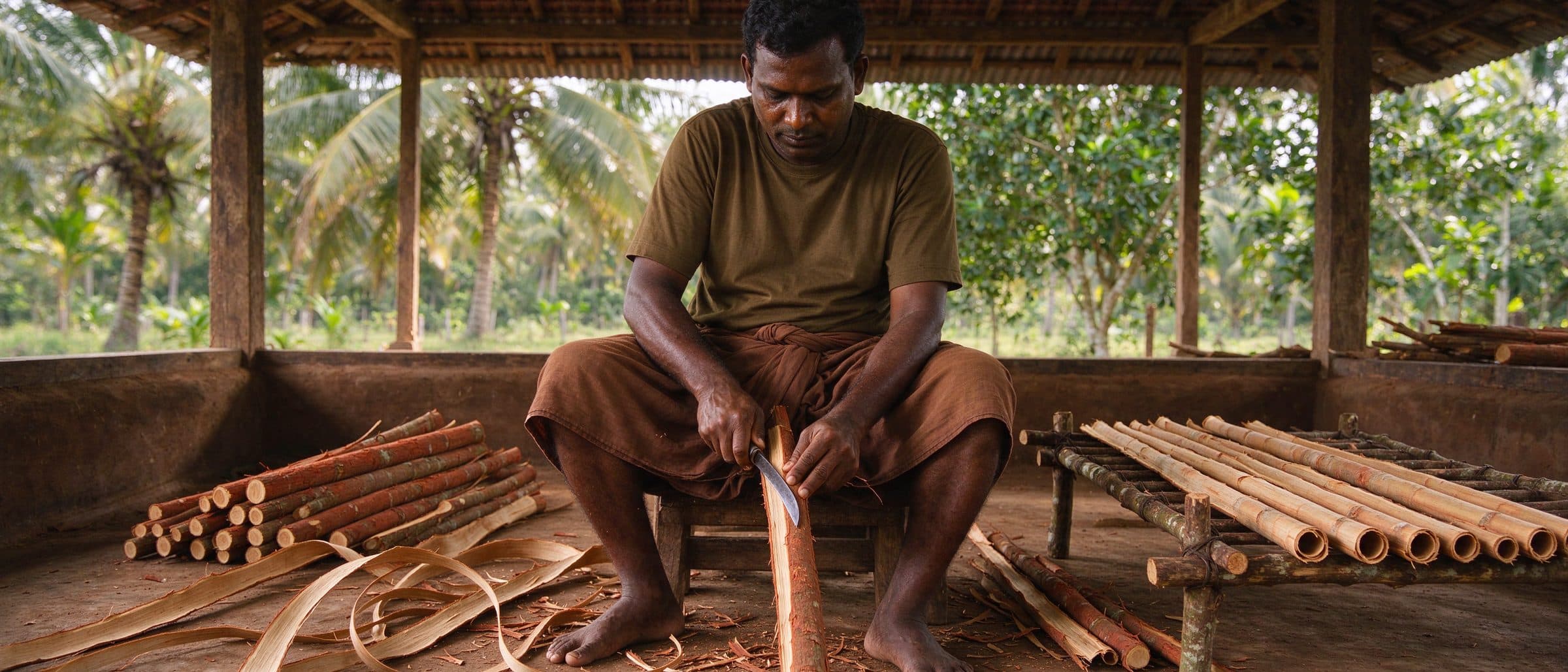
Turning a branch into a quill is unhurried, skilled handwork. Here, broadly, is how the craft unfolds in Sri Lanka.
- 01 — Harvest
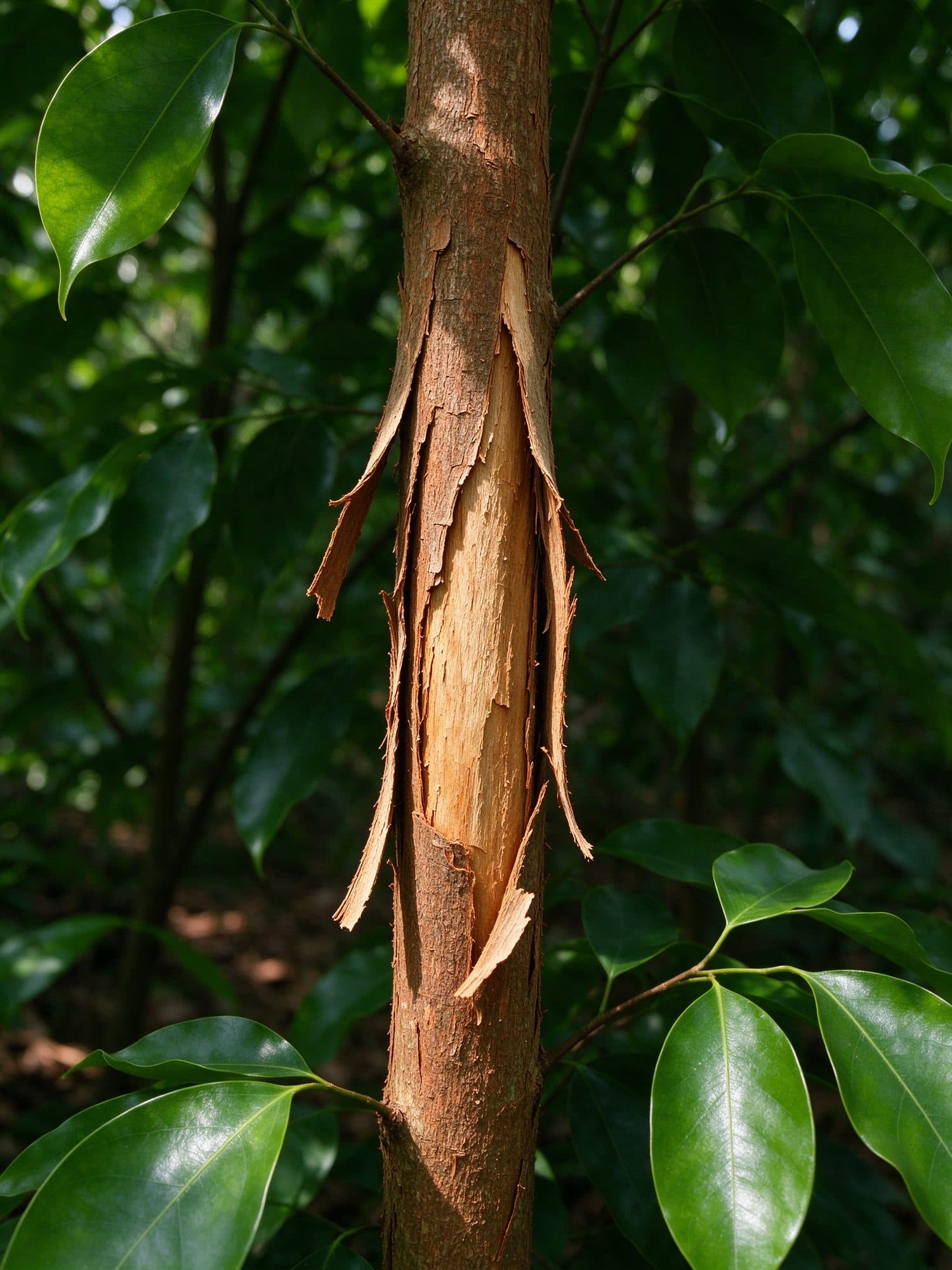
Cinnamon trees are coppiced, so that slender shoots grow from the base. Mature shoots are cut, typically after rains when the bark lifts more easily.
- 02 — Scrape
The rough outer bark is scraped away, and the stem is rubbed with a brass rod to loosen the thin, fragrant inner bark.
- 03 — Peel & roll
Peelers ease the inner bark free in delicate sheets, then layer smaller pieces inside larger ones to form long, slender quills.
- 04 — Dry & grade
Quills dry slowly in the shade, then are sorted and graded — in Sri Lanka, grades such as C5 are defined largely by quill diameter.
Chapter Four
The Character of Ceylon Cinnamon
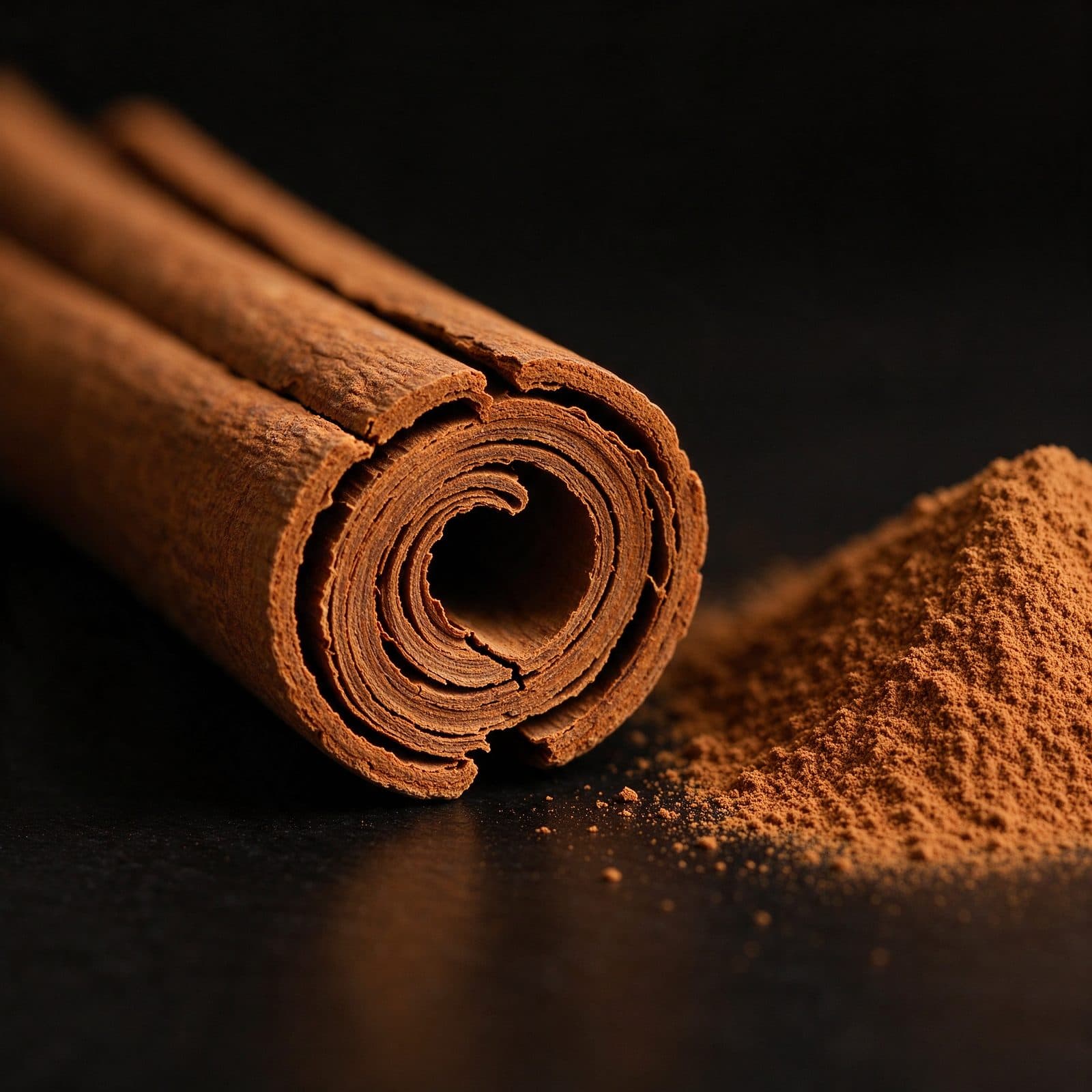
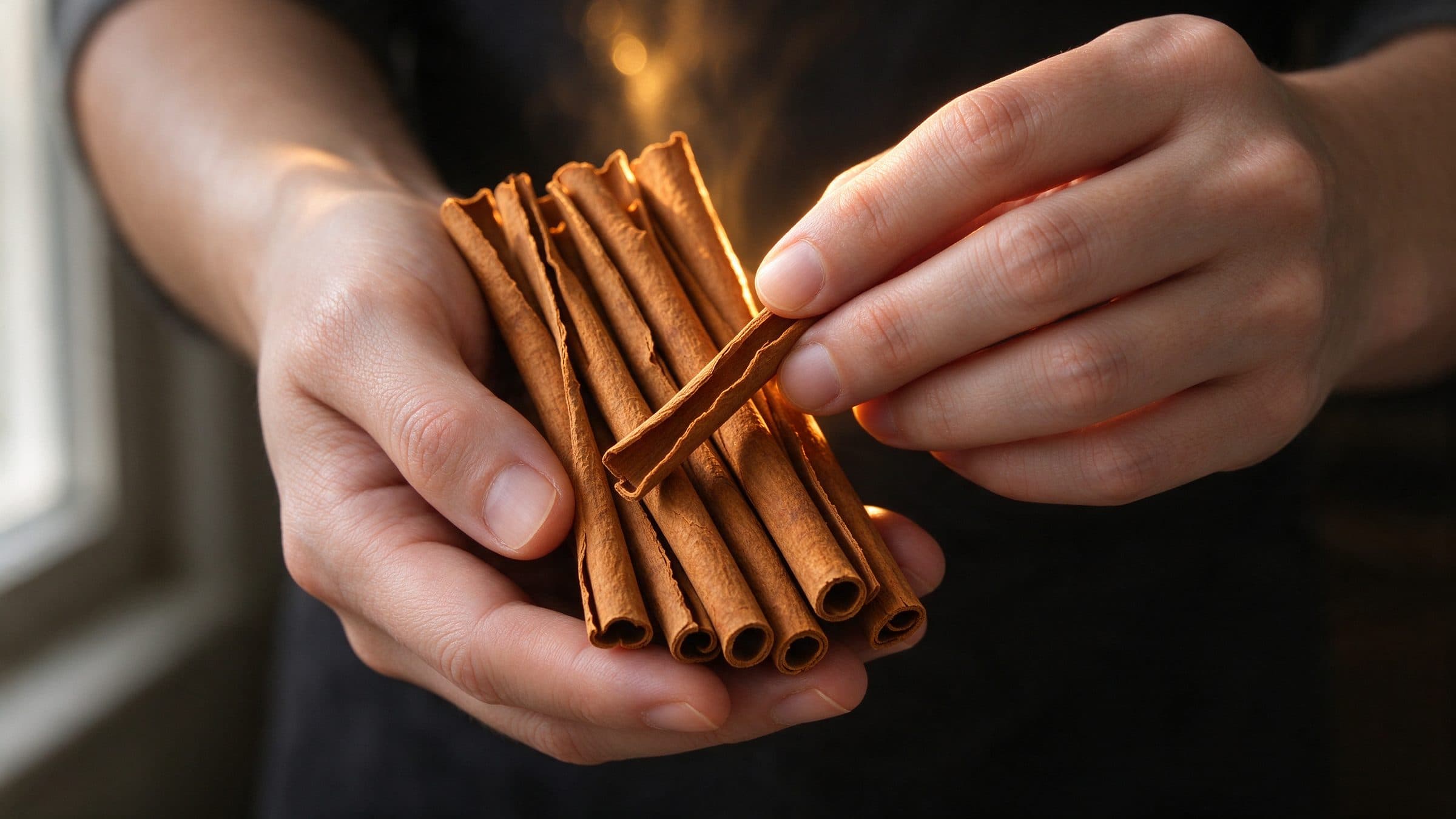
Break a Ceylon quill and you will notice it first in the hand: fine, papery layers rolled one inside another, light enough to crumble between the fingers.
Then the aroma — gentle, sweet and warm, with a delicate, almost floral complexity. It is quieter and more nuanced than the thick, hard bark of cassia, the cinnamon most often found on supermarket shelves, and it is widely noted for naturally containing far lower levels of coumarin.
It is a spice for people who notice the difference.
Chapter Five
Our Approach to Sourcing
We believe good sourcing is mostly a matter of discipline: knowing what a product is, where it comes from and what it has been tested for — and saying so plainly.
- —Products identified clearly as Ceylon cinnamon of Sri Lankan origin.
- —Grades and specifications stated per lot, never implied.
- —Traceability and test documentation shared where available.
- —Fair, respectful dealings with everyone in the supply chain.
Chapter Six
Our Vision for International Partnerships
We want to be the kind of partner an importer is glad to call: responsive, precise about specifications, honest about what we can and cannot supply, and invested in helping your customers fall in love with true Ceylon cinnamon.
Whether you are building a retail range, sourcing for food manufacturing or distributing to specialist buyers, we would like to hear what you are trying to achieve.